
AI/News
Tavus says Griffin is "the first model to pass the video Turing test": 26 of 54 people on a one-minute call took her for real
The company's own study, on its own page: participants were told they would be matched with another participant, were never told their partner might be a machine, and were asked only at the end whether it had crossed their mind. 48% said no. The previous system scored 2.4%. Griffin-Lite goes to "select trusted testers" only.
By Daily Aletheia · Checked against the primary source · 5 October 2026 · 3 min read
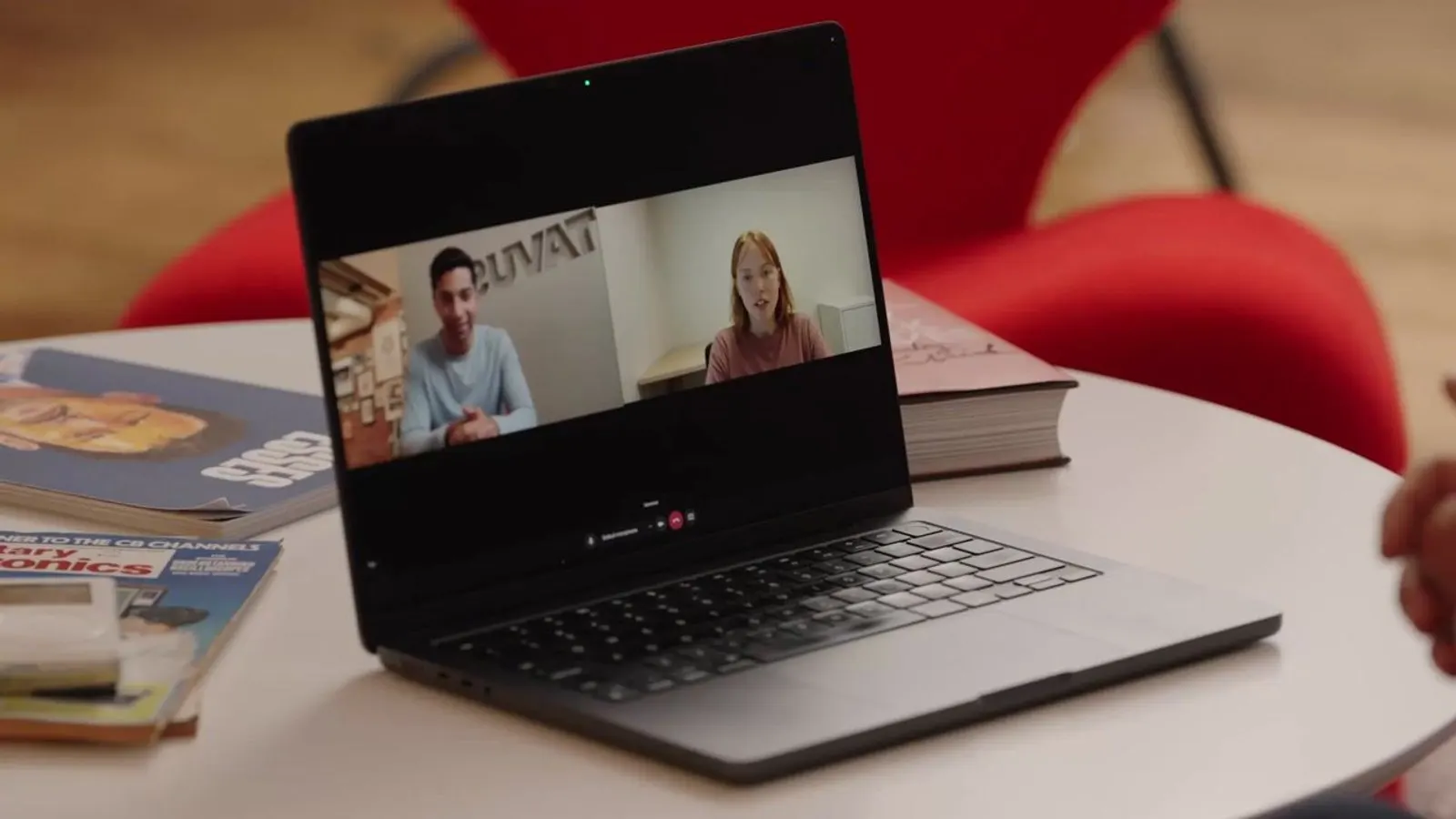
Tavus, a company that sells real-time AI video "PALs", announced Griffin on 1 October: what it calls its first "Human Interaction Model", a video-to-video system that "listens while it talks" and generates a person's face, voice and responses at the same time. The page is signed by co-founder and chief executive Hassaan Raza and head of research Ioannis Patras. A research preview, Griffin-Lite, "is available today to a select group of early testers".
The claim that travelled is on the page's first screen: "Griffin is the first model to pass the real-time, video Turing test. In a live study, 48% of participants who talked with Griffin thought they had talked with a real human." Tavus's previous system, it says, "had a max 2% pass rate".
How the study was run, in the page's own words. Participants were "recruited through an independent research platform" and "told they would be matched with another participant for a one-minute video call to discuss what they were looking forward to this year. Their partner was in fact a PAL powered by Griffin-Lite, generating her face, voice, and responses in real time." After the call they rated their partner on naturalness and trustworthiness, and "only at the end of the survey were participants asked whether it had crossed their mind that their partner might not be a real person". Every participant was then told it had been a model.
The numbers. "Of the 54 participants who spoke with Griffin-Lite, 26 believed their partner was real." On the older Phoenix-4.5 system, 2.4% of 41 participants did. "Those who did suspect tended to suspect within the first 20 seconds." On a 7-point scale Griffin-Lite averaged 5.4 for seeming natural, 5.6 for seeming trustworthy and 5.8 for whether the person would enjoy talking with it again; the conversation scored 4.9 for flowing naturally, "the lowest of the five". On Nvidia's VideoFDB benchmark for full-duplex video conversation the page reports a generation score of 3.83 against a human reference of 3.92.
What it is built on. A conversational model that reassesses the exchange "every sub-second mini-turn" and drives speech and video directly; a speech generator that "can clone a speaker's voice from about 10 seconds of audio"; and a video generator that "generates 720p video in 320 ms chunks in real time" from one reference photo, with an audio-to-video latency the page puts at 0.43 seconds on H100s, "half that of the next fastest method".
What Tavus says about the risk. "The same properties that make Human Interaction Models powerful interfaces for natural communications between human and machine allow them to deceive a human into believing it is not AI." Griffin-Lite "will not be available for use for customers at this time"; the company "anticipate[s] releasing Griffin very soon after these safety concerns are addressed".
Every figure above is Tavus's own, read off its page. No outside group has published a replication.
The Check
- What was said
- "Griffin is the first model to pass the real-time, video Turing test" - Tavus; carried as "nearly half of users in video call tests thought it was a human" (The Rundown, Superhuman, 2 Oct)
- What the Source Says
- Tavus's own page: 54 people recruited through a research platform were told they would be matched with another participant for a one-minute video call; they were not told their partner might be a machine; only at the end of a survey were they asked whether it had crossed their mind. 26 of the 54 said it had not. The previous system scored 2.4% of 41. Tavus calls this "to the best of our knowledge, the first model to have ever passed the video Turing test".
- The Difference
- The 48% holds as the company's own figure, and the page is unusually open about the method. The 'Turing test' label is the stretch: in Turing's game the judge knows there may be a machine and tries to tell; here nobody was asked to look until afterwards, the call was one minute, and the only tester is the vendor. Verdict: the number holds, the label is overstated.