
AI/News
Epoch's Ipsos polls find US adults no more likely to have been hacked since Claude Fable 5 launched: 46% reported a cyber incident in June, 45% in September
Two waves of 1,021 and 1,024 adults with overlapping confidence intervals, and no single incident type that rose detectably; among frequent AI users, 53% to 51%. Epoch sets its own earlier finding beside it - serious vulnerability disclosures jumped in June and again in July - and calls the two "a different outcome".
By Daily Aletheia · Checked against the primary source · 7 October 2026 · 2 min read
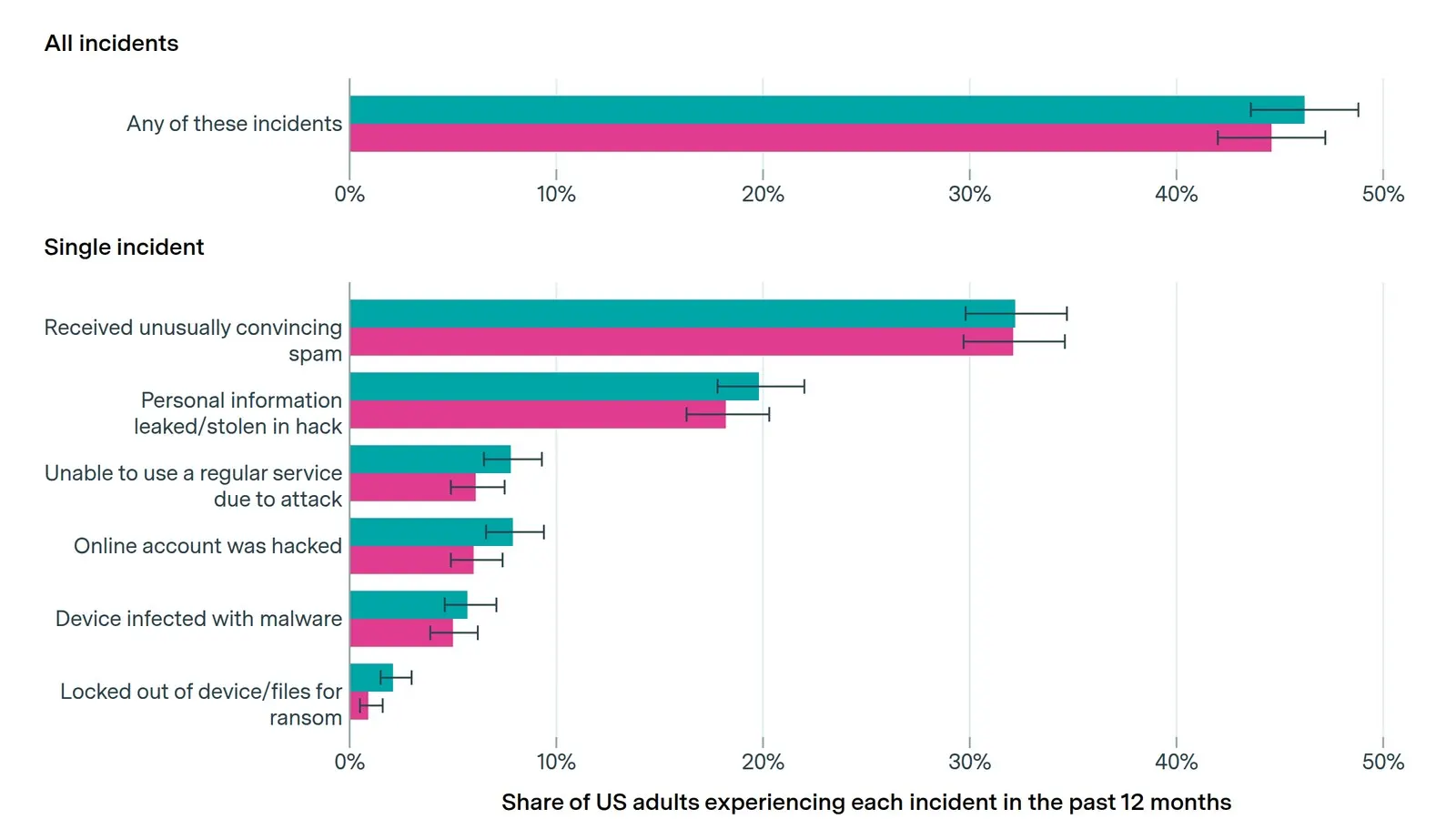
Epoch AI published a data insight on 7 October comparing two Ipsos polls of US adults, one run in June and one in September. "June and September polls from Epoch AI/Ipsos show no detectable increase in the share of US adults experiencing cyber incidents. In September, about 45% reported at least one incident in the past 12 months, such as an account break-in or a data leak, compared to 46% in June." The June wave had 1,021 respondents, the September wave 1,024.
The exact numbers. "The share reporting any incident changed from 46% (90% CI: 44% to 49%) in June to 45% (42% to 47%) in September." Across six categories, "no specific incident type rose in a way we can reliably statistically detect". On the chart, unusually convincing spam is the most common incident in both waves at around a third of adults; being locked out of a device or files for ransom is the rarest, at a few per cent. Among respondents "who report frequent AI use", the share with any incident "changed from 53% (90% CI: 48% to 59%) to 51% (45% to 57%)".
Why these two months. "Our initial poll ran June 12-14, just days after Anthropic publicly released Claude Fable 5 and gave a group of vetted partners limited access to Claude Mythos 5. By September, increasingly capable open-weight models were also available." The period "followed the limited release of Claude Mythos Preview in April, with AI cybersecurity capabilities continuing to advance over the summer".
What Epoch sets against it. "We previously documented a sharp increase in serious vulnerability disclosures in June, followed by a further increase in July." It points to "the incident involving OpenAI models hacking Hugging Face" as "one documented example of what frontier models can do offensively", and to the US Center for AI Standards and Innovation's assessment of "the open-frontier model GLM-5.3 as having similar cyber capabilities to US frontier models around the time of the Fable 5 release". Then the line that keeps the two apart: "Our polling examines a different outcome: whether a larger share of ordinary Americans report experiencing cyber incidents."
Read beside this morning. Anthropic's own page of 6 October counted "at least 129,000 verified software vulnerabilities" found by its Glasswing partners between April and July. Flaws found and people harmed are two different measurements. So far the second line is flat.