
News·27 Nov 2026
Replatting an Austin lot to sell homes on their own lots often costs more than $100,000 in engineering and design, a council resolution says - and it asks for a goal to match peer cities such as San Antonio, $1,500 in under 30 days
Item 59 on the council's 3 December agenda also says the same project carries impact fees more than eight times higher than a HOME Phase 1 project. It asks the City Manager for reports in March and by 1 April 2027, aiming for code changes by October 2027.
By Daily Aletheia · City of Austin - Draft resolution, item 59, Residential Infill Projects, Council meeting backup for 3 December 2026 (posted 25 Nov 2026) ↗ · 2 min read
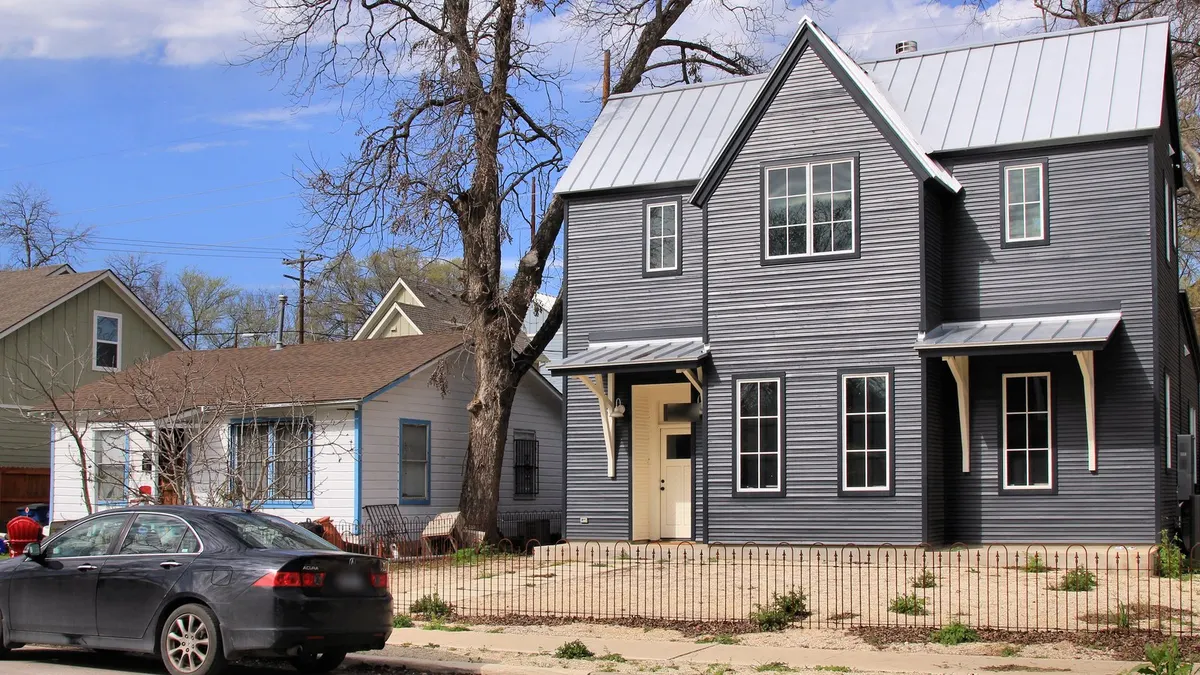
Austin's council has a resolution on its 3 December agenda that puts figures on why starter homes on their own lots are, in its words, "nearly impossible to deliver". A HOME Phase 2 project, which must replat to sell its homes on fee-simple lots, carries "impact fees more than eight times higher" than a HOME Phase 1 project that may look the same, plus fees such as parkland dedication, "and often more than $100,000 in engineering and design costs", the draft resolution says.
It is item 59 on the 3 December agenda, sponsored by Council Member Krista Laine with four co-sponsors, its backup posted on 25 November. It directs the City Manager to report on cutting the rules and fees on Residential Infill Projects, whether the homes are sold on fee-simple lots or as condominiums.
The draft says the City reviews an infill replat "under largely the same process as a greenfield subdivision", and that residential infill subdivision "has not been happening in Austin".
What it asks for
- A goal for infill subdivision applications that "matches or improves on peer Texas cities in both cost and review time". For reference, the draft gives San Antonio at $1,500 with approval in under 30 days, Dallas at $2,800 in under 30 days and Houston at $1,500 in under 30 days.
- Options to cut impact fees on these projects: keeping the original plat date for the fee, and an exemption or a reduced rate for homes priced below the trailing twelve-month average sale price, "modeled on the approach used in Houston".
- An evaluation of concurrent rather than sequential department review, standard template easements and restrictive covenants, and utility service lines allowed to cross new lot lines.
- An anonymous survey of the city staff who review these applications.
The dates
The proposed reforms come in a consolidated report in March 2027, and a report comparing Austin's code and fees with the peer cities' is due by 1 April 2027. "Council will consider whether to initiate any Land Development Code amendments after receiving the City Manager's report", the draft says, with a goal of adopting them by October 2027.
The same meeting hears the change that would let three or four homes go in one building under the house code.